
Conversation 1
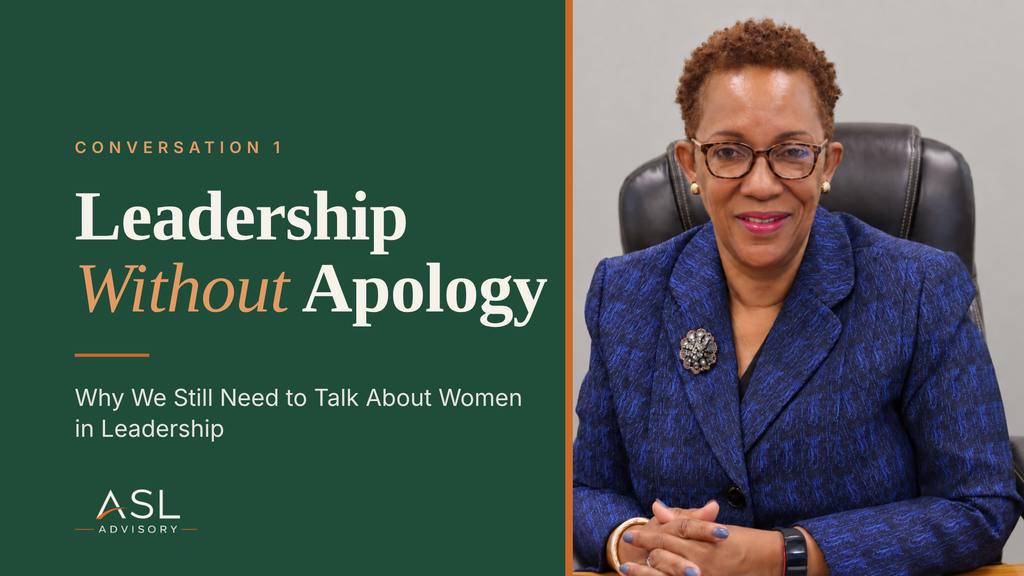
Why We Still Need to Talk About Women in Leadership
Having a seat at the table is not the same as having a voice that truly matters there.
I learned that early.
When I first became a senior manager, I was responsible for an area that needed significantly more support to perform well. I wrote a paper recommending changes that I believed would make things work better and submitted it to my boss’s boss.
There was no response. The paper was not even discussed.
Later, I moved to a new job. Not long after I left, my recommendations were implemented.
I remember feeling discouraged. I questioned myself. Had I been out of line? Was the idea even any good?
I kept second-guessing my own judgement.
Then people began saying to me, “Look at what happened after you left. You were right.”
The idea had been good from the beginning. I should not have had to leave for it to be recognised.
But that experience taught me something important: I needed to find and use my voice.
And as people began to see the value of my judgement and the results that followed, my voice began to carry more weight. That was part of how I built credibility.
I carried that lesson with me through more than twenty years in leadership, much of it at the executive level.
Counting Seats
We have made real progress.
Women now lead organisations, serve on boards, build businesses and shape policy here in the Caribbean and around the world. A generation ago, this was far less common.
We should recognise and celebrate that progress.
But we often measure that progress by counting seats.
How many women are on the board?
How many are in senior management?
How many have reached the C-suite?
Those numbers matter.
But there is another question worth asking:
When women get to the table, how much influence do they have once they are there?
Leadership is not simply about occupying a position.
It is about being heard.
Being able to challenge.
Contributing to decisions.
Having the confidence to use your voice, even when yours is the minority view.
Representation opens the door. Influence determines what happens after you walk through it.
We know women can reach senior roles. Now we need to talk about what happens once they get there.
Can they lead as themselves?
Are the same leadership behaviours interpreted differently when they come from a woman?
And who supports the woman who is supporting everyone else?
What Have I Learned?
Competence is essential.
You need to know your work, exercise sound judgement, make difficult decisions and deliver results. Nothing replaces that.
But competence alone does not give you influence.
Influence is built through relationships, courage, self-awareness, credibility and the ability to communicate with people who may see things differently.
It also means knowing your own voice and being willing to use it.
Some of my greatest supporters throughout my career were men. So this series is not about women versus men.
It is about looking at leadership through another lens and asking what we can learn from women’s experiences that can help us develop stronger leaders and healthier organisations.
Why Now?
Stewardship.
Leadership is entrusted to us for a time. We do not occupy these positions forever.
And those of us who have travelled the road have a responsibility to share what we have learned.
Not just the successes.
The difficult lessons too.
The things I would do differently. The things I wish someone had told me. And the things the next generation of women should not have to learn the hard way.
Over the next seven weeks, we will talk about the double standard, why competence alone is not enough, the loneliness of senior leadership, women supporting women, balancing ambition and family, executive presence, and the legacy we leave.
Some of these conversations may be uncomfortable.
Good leadership conversations sometimes are.
So as we begin this series, I have one question for you:
Have we given women more seats at the table, or more say at it?
I would love to hear your thoughts in the comments.
