
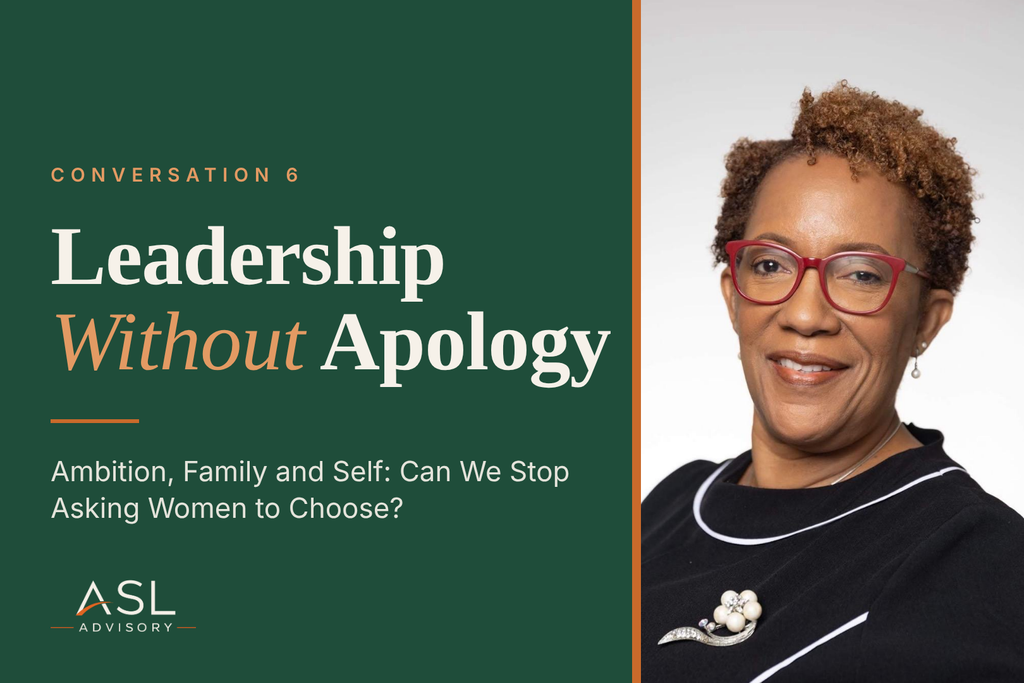
Conversation 6
Long before I had a leadership title, apparently I had leadership ambitions.
While still in primary school, I decided to organise a Carnival band. I loved Carnival and music, especially steel pan, and I wanted to do more than just take part.
I designed the costumes, made samples and recruited my friends.
There was only one small problem. I had not told my mother.
She first learned of my grand plan when other parents started calling her, because their children had come home saying they needed costumes for Annette’s Carnival band. My mother promptly informed them that Annette was doing no such thing.
And that was the end of my Carnival band.
I smile when I think about it today. Even then, I had conceived an idea, organised it and convinced others to join me. The leadership instinct was already there.
I Did Not Always Call It Ambition
In one of my early roles, I often finished my work quickly and went looking for other tasks or other people to help. That initiative was not always appreciated, and I eventually realised the environment was not the right fit. So I moved on.
In the next organisation, something very different happened. People began to see more in me. I remember reviewers saying, “We think we can get more out of you.” And I kept progressing.
I was ambitious, though I might not have used that word at the time. I wanted to grow, to contribute, to be challenged, and to discover what else I was capable of.
My father was one of my greatest supporters. My mother expected nothing less than my best. Her famous words were, “Prove them wrong.”
Ambition Also Required Me to Change
Those who know me today may find it surprising, but I was extremely shy.
I was comfortable leading small groups, and I even led my church choir. But put me in front of a microphone and I would tremble like a leaf. No one could get me to stand up in church and do a reading.
Eventually, I realised that if I wanted to lead, this had to change. So I worked on building my confidence and assertiveness.
Who you are today does not have to set the limits of who you can become.
Then Came Family
As my career progressed, I was also raising children. I wanted to be there for them, and I wanted to build a good life for my family. Sometimes those two commitments competed for the same hours.
I tried not to miss school events, but that often meant working very late. And in my mid-thirties, I went back to studying while working and raising children who were in school themselves.
Some evenings, everybody had homework. Including Mommy.
I know there were times I rushed my children to finish their work so I could begin mine. When you are tired and there are not enough hours in the day, patience becomes one more thing you have to work at.
Did I always get it right? No.
The Guilt Was Real
There were times I wondered whether I was doing enough for my children, and whether work was getting too much of me.
Sometimes the guilt came from outside too.
At one stage, I had reached the top of what was available to me professionally in Dominica. To keep growing, I accepted an opportunity that required me to move. My daughter was the last child still at home.
Someone asked me, in a tone I have never forgotten, “You’re leaving your child?”
Suddenly, a professional decision had become a judgement about my motherhood.
I was not abandoning my daughter. She was supported, and I remained actively involved in her life. I simply had to become more creative about how I mothered. This was before Zoom was part of everyday life, so I would finish work, get on Skype with her and help her study.
It was not always ideal. But she still talks about those Skype study sessions today.
We talk so much about balance that we sometimes forget about adaptation.
The Second Shift Is Real
My experience is far from unusual. The International Labour Organization’s 2018 report on care work found that, around the world, women perform about three-quarters of all unpaid care work, more than three times as much as men.
For many women leaders, the second shift begins the moment they get home.
There Were People Behind the Woman Who Was Leading
I could not have done what I did without support.
My mother was tremendous. My siblings stepped in. When I had to work late or could not be somewhere, my family picked up the slack.
And my husband was my sounding board. When I wanted to be sure I was not being perceived as emotional, or when I needed someone to challenge my thinking professionally, he was the one I turned to.
We sometimes tell leadership stories as though one extraordinary woman managed everything on her own. That was not my experience. There were people behind the woman who was leading, and I am deeply grateful to them.
When the Season Changed
Then the season changed.
My husband, my sounding board for so many years, came to need care himself. And I had to learn to care for him while carrying the responsibilities of a managing director.
It was one of the hardest balances of my life.
At work, I felt I could not afford to appear vulnerable. Experience had taught me that some people take advantage when you are at your weakest. So I held a great deal in at work, while giving everything I could at home.
I share this because I know many women are quietly carrying something similar, while still showing up and leading every day. If that is you, you are not alone.
What Did My Children See?
For years, I worried about what my career might have taken from my children.
Today, I can see another side. My children are proud of what I have accomplished, and they are part of this next chapter as I build my own practice. My creative son advises me on my videos and speaking engagements, and helps with my equipment. I record myself and send it to him to listen to before I go live. My daughter, with her background in psychology, is already contributing to some of the work I am developing.
And then there is my older son.
Growing up, he watched me try to balance a demanding career, a family and finding time to exercise. Exercise mattered to me, but when everything else demanded my attention, it was easy to move it down the list.
He is now a fitness instructor, and many of his clients are women. I believe watching me gave him an understanding he now brings to his work: women often know exercise matters. They are trying to fit it into lives where everybody and everything else already has a claim on their time.
Something I saw as one of my own struggles helped shape how my son serves the women he works with.
Sometimes we inspire our children not because we balanced everything perfectly, but because they watched us keep trying.
My children saw the long hours, the studying and the times I did not get it right. They also saw persistence, responsibility and what hard work could make possible. I used to tell them that if Mommy worked hard and the organisation did well, perhaps there would be a bonus, and perhaps, as a reward for their patience, we could travel together. Of course, once I made that promise, I had to deliver.
I also made sure that once a month we had a family night, when they got to eat their favourite junk food. They still reminisce about those nights, and now they do the same with their own children.
Now they are helping me build what comes next. That means a great deal to me.
But Where Was I in All of This?
My older son’s career is also a reminder of something I did not always do well: putting myself on my own priority list.
Sometimes I did well. Sometimes I fell off the wagon. But when work, family, study and caregiving competed for my time, I was often the easiest person to move down the list.
The problem is that everything else is never finished. There is always another deadline, another person who needs you, another task.
Looking after yourself is part of what enables you to keep caring for what matters. You do not have to earn it first by taking care of everybody else. I wish I had understood that sooner.
Perhaps Balance Is the Wrong Word
I am not sure I ever achieved perfect work-life balance. I am not even sure it exists in the way we describe it.
There were seasons when my career needed more. Seasons when my children needed more. Seasons when my studies needed more. Seasons when my husband needed more. And there should have been more seasons when I allowed myself to need more.
Perhaps balance has less to do with equal time and more to do with intentional choices: recognising what a season requires, what we are willing to give, what we will not sacrifice, and where we need help.
What Organisations Can Do
Organisations have a part to play too.
Do not assume a woman with family responsibilities is less ambitious.
Offer flexibility where the work allows, and make sure using it does not quietly count against people.
Judge people on results rather than hours seen at a desk.
And when someone is carrying a heavy season at home, make it safe for them to say so.
What Have I Learned?
I wanted to progress. I wanted challenging work. I wanted to provide for my family and be a good mother. I wanted to keep learning. And I wanted a life beyond my job.
Those desires were not always easy to reconcile. But they were never mutually exclusive.
Women should not have to shrink their ambition to prove their commitment to their families. Nor should we pretend there are no trade-offs. There were sacrifices, guilt and late nights. There were people who helped. There were things I would do differently, and choices I would make again.
So perhaps the question is no longer, “Can women have it all?”
Perhaps it is this: what does having it all mean to you, in this season of your life?
And in answering it, remember that the woman making all those choices needs a place on her own priority list too.
Next week, we will talk about executive presence and what it really means to be comfortable in your own skin.
I would love to hear your perspective.
